


(Via Beyondish)
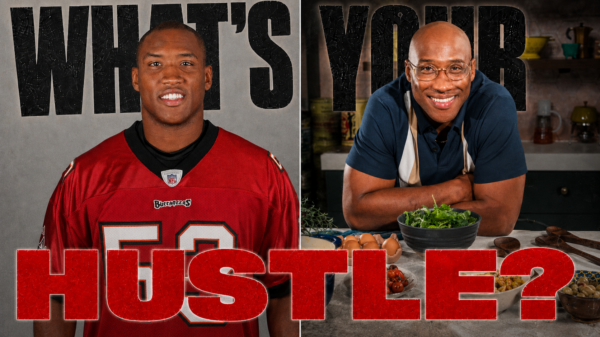
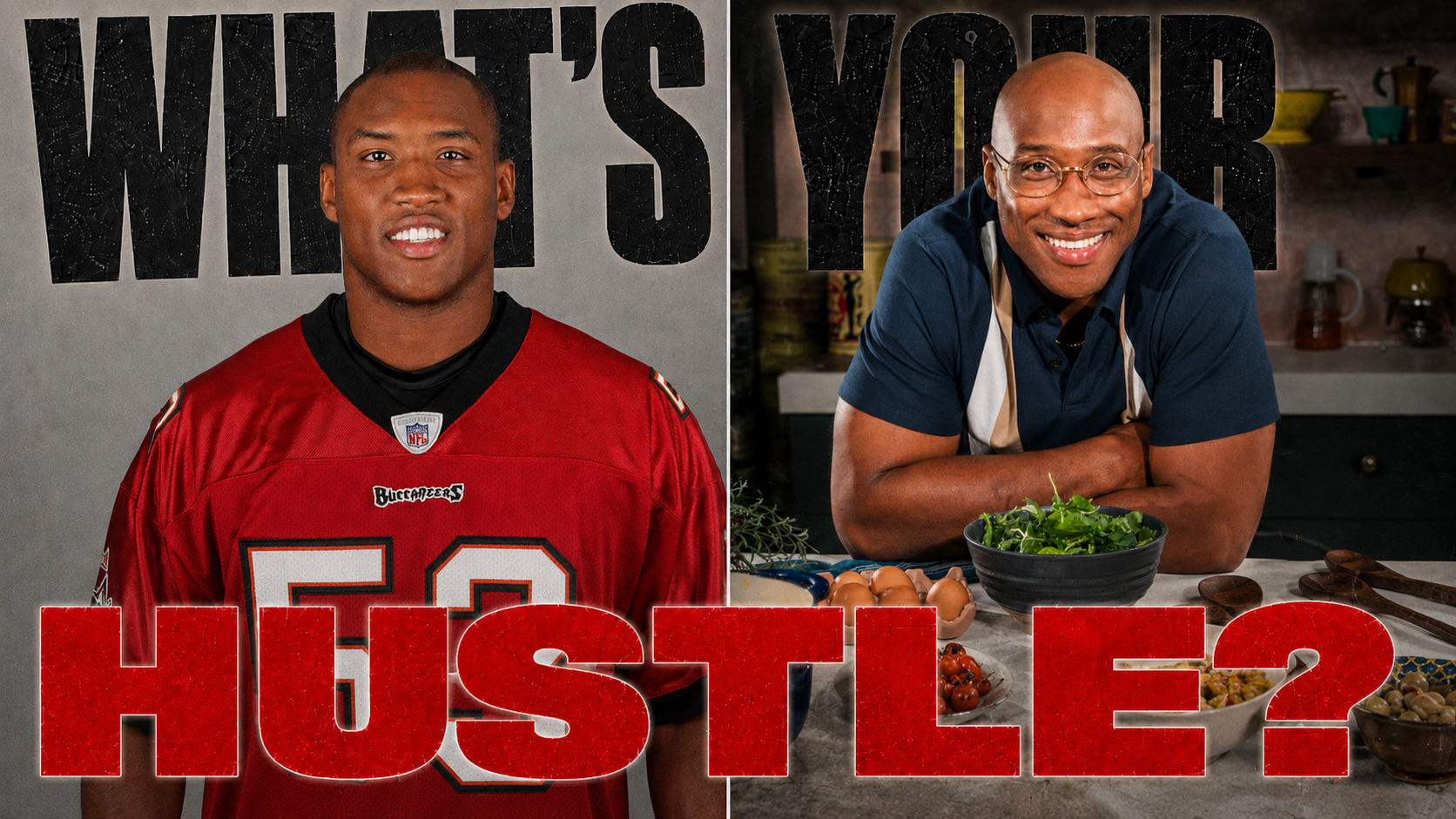
Most people spend their entire lives chasing one dream. At 38 years old, Derrell Smith has already lived three.
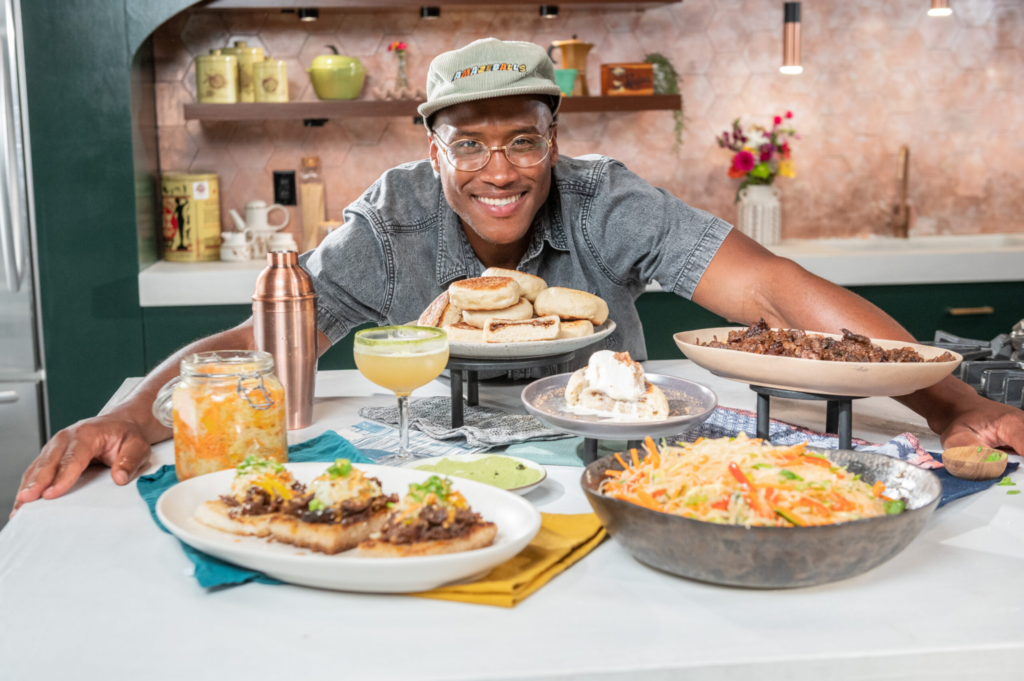
He was a standout football player and captain at Syracuse who reached the NFL. When his playing career ended, he became a New York City advertising executive. Today, he is an entrepreneur, chef and television host whose work has appeared on The Today Show, The Drew Barrymore Show, Beat Bobby Flay and Tastemade.
From the outside, Smith’s journey looks like another classic story of “reinvention.”
But after speaking with him, it became clear that his story is not about repeatedly becoming someone new. It is about learning how to use the same strengths in different arenas.
Smith describes himself more simply: “a really confident nerd who just so happened to be given an athletic body and a scholar’s mind.”
Across football, advertising and food, he has relied on the same four qualities: confidence, creativity, competition and communication.
This is the Derrell Smith Hustle.
A Confident Nerd
Before football became his public identity, Smith started the chess club in high school. In his bedroom, he once transformed a Styrofoam pad into a homemade dartboard. Long before television kitchens and business meetings, he knew he was a creator.
“I always knew that I wanted to be some type of engineer or inventor,” Smith said.
Athletics developed alongside that curiosity. Smith became a state champion in discus and a standout football player in Delaware. At Syracuse, he became a captain, finishing with 270 tackles and a school-record eight forced fumbles. He later signed with the Tampa Bay Buccaneers and joined the Houston Texans.
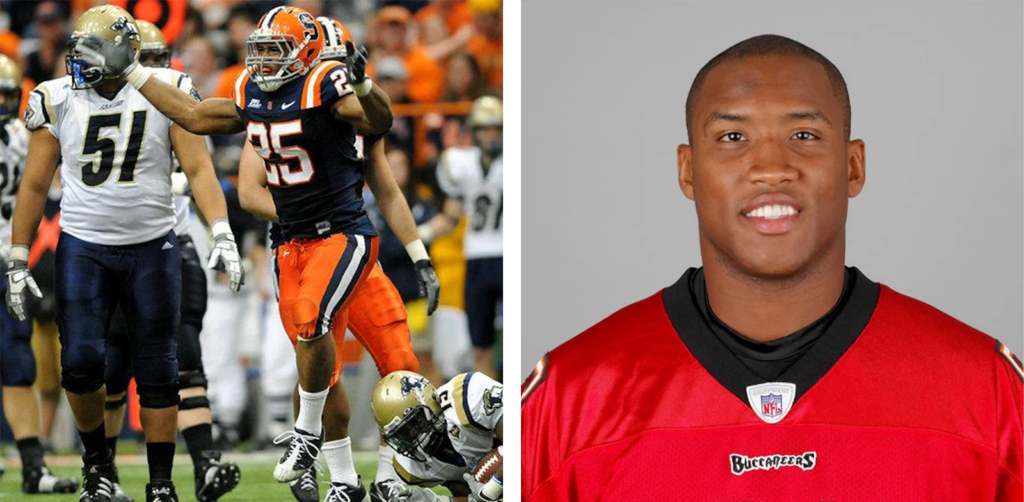
(via Syracuse.com) (Via Getty Images)
For many athletes, reaching the NFL is the final destination. But Smith looked at it differently, even while living it.
“You know what’s wild?” he said. “I went to the NFL, but I knew I wasn’t going to last long.”
It wasn’t pessimism – it was actually awareness. Football mattered, but Smith never believed it contained his entire identity.
“I always knew that I would get into creating something,” he said. “I knew that I wanted to do it on my own terms.”
Football just gave him an operating system.
“Football was kind of the practice of operating and executing under pressure,” Smith said.
A play lasts seconds but contains weeks of study. Once the ball is snapped, a player must process the speed of play, manage the chaos of a stadium and act decisively in fractions of a second.
“Whether it’s a four-second play in front of 70,000 people or a business decision years later, if you can apply that type of concentration to whatever you’re doing in life,” Smith said, “that’s how I took sports and adapted it to my manhood how I operate in life and how I execute things.”
When a neck injury ended his career, Smith had to apply that lesson without a team, depth chart or game plan.
Creativity as a Commodity
Smith returned to Syracuse in 2010 to earn a master’s degree in advertising from the S.I. Newhouse School of Public Communications. The move eventually took him to New York City, where he worked inside major advertising agencies and discovered another kind of competition.
At first, agency life felt like an extension of college. There were ping-pong tables, beer taps, Nerf battles and late-night presentations. The atmosphere seemed casual, but the expectations were not.
“You’re basically selling creativity and ideas and imagination,” Smith said.
Football taught Smith how to execute a play, but advertising taught him how to design one. How do you identify what people feel, express it simply, and make them care?
During our conversation, he explained that idea through professional wrestling.
“I think in life, everybody’s a wrestler,” Smith said.
Wrestling characters work, he argued, because they externalize feelings audiences cannot always express. Stone Cold Steve Austin represented the everyday person’s desire to stand up to an overbearing boss. The Rock embodied unfazed charisma and self-belief.
“Wrestlers get to do what you can’t do,” Smith said.
To him, great advertising does something similar. It recognizes a desire or frustration and gives it clear, memorable language.
That understanding became central to his next career. Smith would no longer communicate through campaigns. He would communicate through food.
Speaking Through Food
Cooking was not a sudden discovery. Smith grew up watching his mother in the kitchen, cooked for his family as a child, and experimented with food at Syracuse. When football kept him from returning home for Thanksgiving, he cooked for teammates.
What changed later was his decision to treat that interest as a profession.
“I worked in advertising during the day,” Smith said. “Then I’d come home and cook.”
He catered for free, cooked for friends and carried food across New York City on his bicycle. Experience had to be earned.
“I needed to learn,” Smith said. “I needed to get my reps in because I didn’t come from this industry.”
The language remained athletic: reps, practice, execution.
His early business took shape around meatballs and a sauce he developed while back at Syracuse. The Daily Orange reported that in 2016, Smith won Brooklyn’s Meatball Takedown and brought his concept to Smorgasburg under 99EATS. He balanced agency work with weekends preparing and selling food, but when his department was eliminated in 2017, the side Hustle became the main one.
Passion alone, however, could not sustain it.
“Passion is only going to get you so far,” Smith said. “If you want to work in the industry, you have to turn it into a job.”
That meant pricing his labor, negotiating partnerships, producing content, appearing on camera and building beyond one dish. The advertising executive and football player did not disappear—Smith needed to combine the discipline of one with the storytelling instincts of the other.
Through Tastemade, Smith became the host and executive producer of Mad Good Food, a three-season series built around generous, family-style cooking. He later competed on Food Network’s Beat Bobby Flay, carrying the same competitive instincts into a different arena.
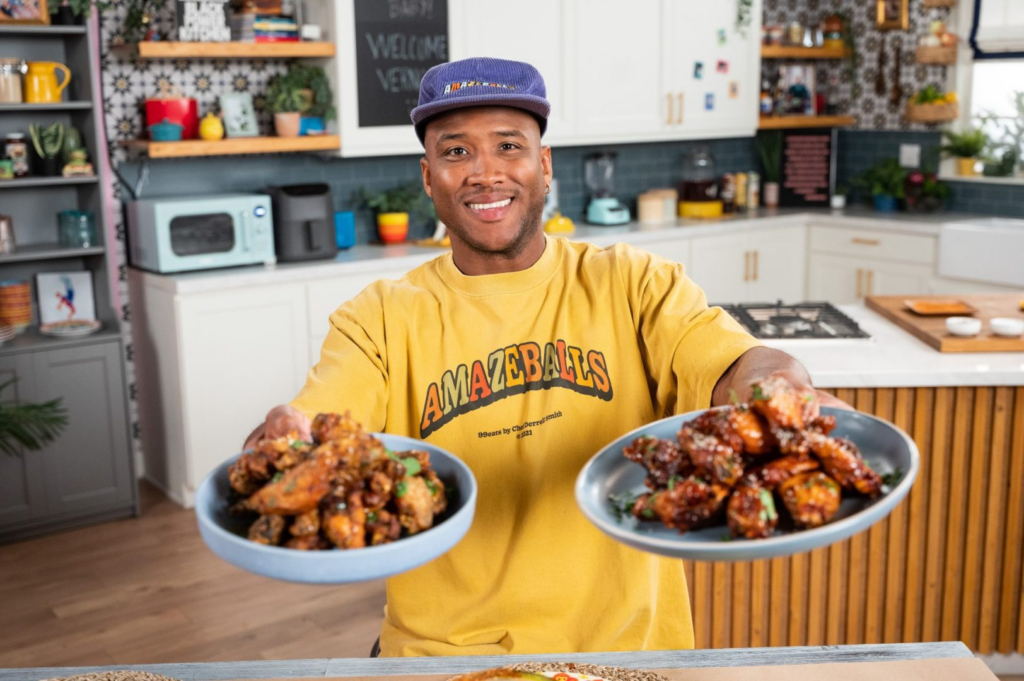
(Via Rolling Out)
Yet food remains more than content or commerce.
“There have been times where I’ve just been in a bad mood,” Smith said. “I just go cook.”
He remembered spending one Thanksgiving away from his family and feeling overwhelmed by sadness. Instead of ignoring it, he entered the kitchen.
“I poured all of that sadness into my outlet,” he said.
Then people gathered around the finished meal.
“I wish you could have seen the people sitting around the table eating that food,” Smith said.
Food offers him something the other careers could not: an immediate sense of care.
“It’s my outlet,” he said. “It’s a way to spread love through food.”
The New Hustle
When Smith pursued football, Hustle looked physical: early mornings, weight rooms, injuries, roster battles and the pressure to prove he belonged.
“In the NFL, you’re battling so many different things,” he said. “You’re competing with another player for your roster spot. You’re competing against your draft position. You’re competing against injuries.”
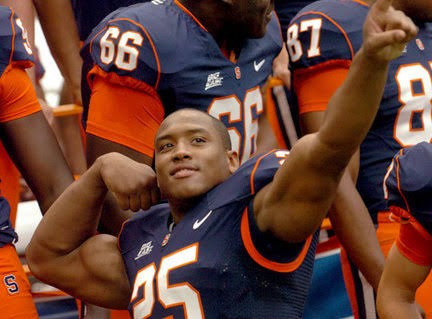
(Via Syracuse.com)
Football taught him to compete with other people. Adulthood taught him that the more enduring contest is internal.
“You really start to realize that competition is between you and yourself,” Smith said. “Being able to outdo the previous version of you every day.”
Now, as a father and entrepreneur, his work is less visible but no less demanding.
“My Hustle isn’t riding the bike around New York City to cater anymore,” he said. “My Hustle now is sitting in a room by myself and creating a plan designing strategy, meeting with partners and planning my time so that I don’t waste it.”
Then he reduced the evolution to one line.
“It ain’t a bike no more. It ain’t a weight room no more. Now it’s a paper and a pen.”
Swimming in the Ocean
Before our conversation ended, I asked Smith what he would tell someone standing at the edge of a major change considering a new career, an uncertain opportunity or a life beyond the identity that has always defined them.
“I like to swim in the ocean,” he said.
“But once you get far enough from shore, everything changes,” he said. “You look down, and there’s 20 or 30 feet of water underneath you, and it’s just silence.”
There may be waves. There may be danger. A storm may arrive.
“But if you can remain calm in that,” Smith said, “then the world is yours.”
Uncertainty does not disappear, but fear becomes manageable when a person trusts the preparation that brought them there.
“The sun’s gonna come back out the next day,” Smith said. “Appreciate it when it’s there. Appreciate the rain. Appreciate all of it.”
Football, advertising and food may look like separate lives, but for Smith, they are expressions of the same one.
At the end of the day, he’s just “a really confident nerd who just so happened to be given an athletic body and a scholar’s mind.”
That is the Derrell Smith Hustle.
What’s YOUR Hustle?
Quick Hits
Cats, dogs or something else?
“Neither. I had a bunny in college…, but as I grow older, I may be a dog guy later on. I’m a cow person.”
Favorite condiment?
“Mayonnaise.”
Favorite emoji?
“The cake emoji. I always send somebody a piece of cake-a virtual piece of cake.”
GOAT in any industry?
“Michael Jordan. He’s not just in any industry. He’s in every industry that involves competition.”
One small joy throughout the day?
“Sitting on the toilet. With a child and a partner, it’s the only real place that you can get some peace and quiet.”
Follow Derrell Smith on Instagram!
Follow Jacob Heyman on Instagram!
That’s HIS Hustle.
This is OUR Hustle.
What’s YOUR Hustle?