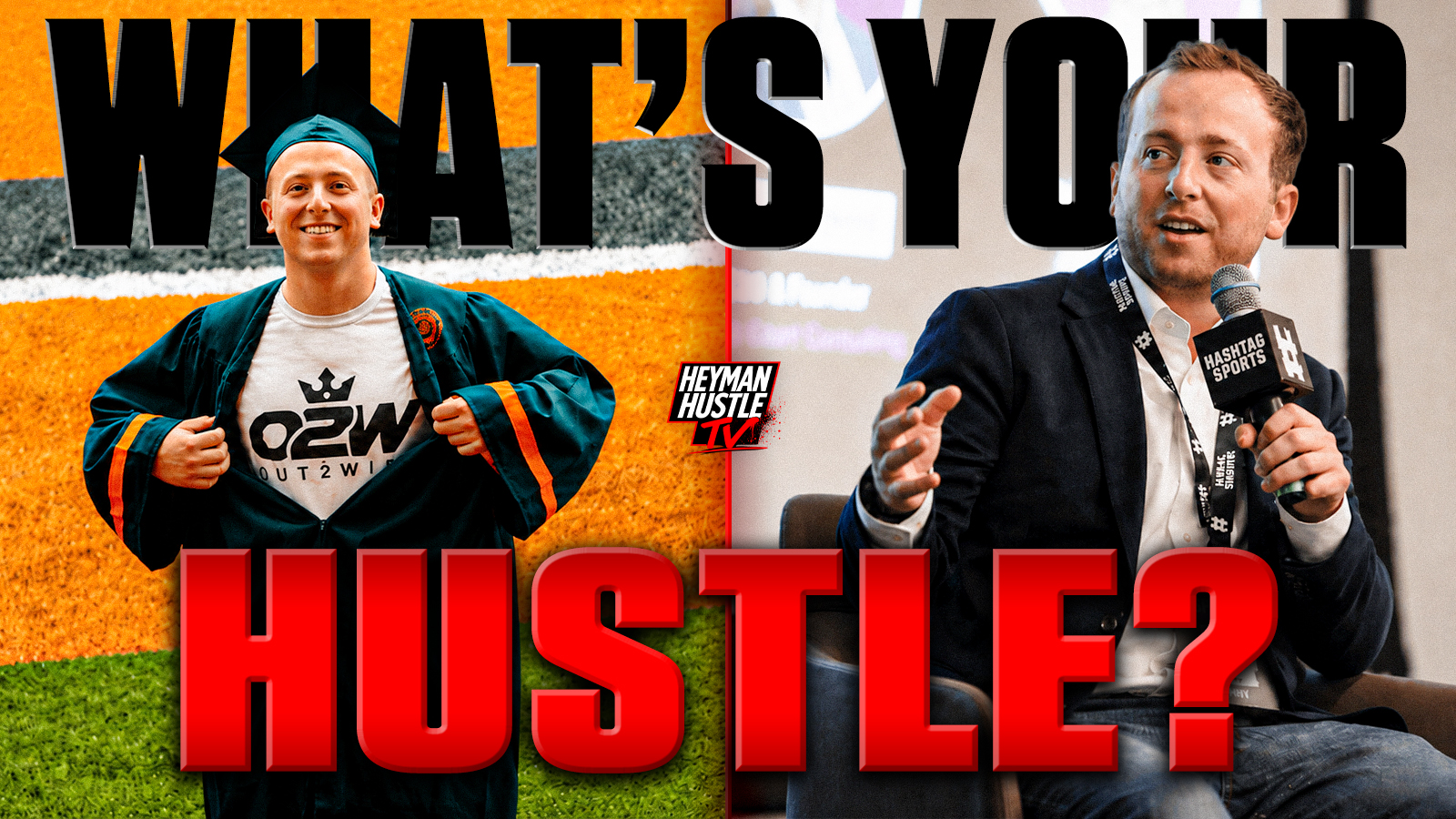

Jack Adler’s first lesson in entrepreneurship only cost three dollars.
In fact, when Adler arrived at Syracuse University in 2019, he knew he wanted to work in sports, but had no idea that he’d one day start a business.
Today, Adler, 25, is the founder and CEO of Out2Win, an athlete-influencer marketing company that’s raised over $1.3 million and built a platform featuring more than 400,000 athletes and influencers.
What began as a student-run NIL agency has evolved into a technology-driven platform helping brands figure out which talent can actually move people — and then build campaigns around them.
None of that was the plan.
But in April 2020, when COVID-19 shut down much of the country, Adler and his twin sister, Kate, started asking people to do something small: donate $3, post about it on social media, and challenge someone else to do the same.
There was no company to build and no investor to impress. Just an idea they thought could help.
But then… people started donating.
The 3 Dollar Challenge eventually raised more than $80,000 for nonprofit organizations, from over 12,000 donors. But for Adler, a college freshman at the time, the more lasting result was realizing that an idea in his head could become something real.
“Before that, I had never taken an idea and turned it into reality,” Adler told HeymanHustleTV. “It taught me that it was possible.”
A year later, another idea arrived at exactly the right time.
On July 1, 2021, the NCAA’s interim name, image and likeness policy took effect, allowing college athletes to earn money from endorsements, appearances and sponsored content.
Within weeks, Adler and his friends entered the new marketplace.
Just like that, Out2Win was born.
But how did a college kid, with no entrepreneurial experience, go on to become Syracuse University’s Entrepreneur of the Year, part of Philly’s 25 under 25, and one of the most forward-thinking innovators in the influencer marketing/NIL era?
The answer is simple: Because Jack Adler isn’t just Out2Win… but he’s Here2Stay.
THIS is the Jack Adler Hustle.
Learning by Doing
The first Out2Win was simple: an agency run by college students for college students.
Adler and his team represented athletes and connected them with businesses entering NIL. One early campaign paired a local hot-sauce brand with members of Syracuse’s men’s and women’s lacrosse teams for TikTok and Instagram content.
The challenge wasn’t finding athletes. It was convincing businesses that NIL was worth paying attention to.
Before Adler could pitch a campaign, he often had to explain the marketplace itself — what NIL was, whether it was allowed and why a college athlete could be valuable to a brand.
He heard ‘no’ hundreds of times before Out2Win secured its first partnership.
But each rejection showed him what brands understood, what confused them, and what they actually needed.
The 3 Dollar Challenge taught Adler to start, and Out2Win was teaching him to listen.
In 2021, Syracuse gave him another place to learn. Adler entered Out2Win into the Whitman School of Management’s Orange Tank — a Shark Tank-style pitch competition where founders present their businesses to experienced entrepreneurs and executives.
Third place.
Not bad for a newly founded company. But for Adler, it wasn’t enough. Instead, it put a chip on his shoulder.
He returned in 2022.
Second.
Then in 2023 — his senior year and last chance to win – Adler entered Out2Win one final time.
The result? First place and a $25,000 prize.
So we asked Jack what changed more across those three years: Out2Win or Jack Adler?
“I’d like to think I evolved as a leader and learned how to build a business better,” he said, “while the business continued taking on new lives of its own through each phase.”
Persistence is usually framed as refusing to quit, but Adler’s version required something harder: believing enough in the opportunity to keep going while staying willing to admit that the current version might be wrong.
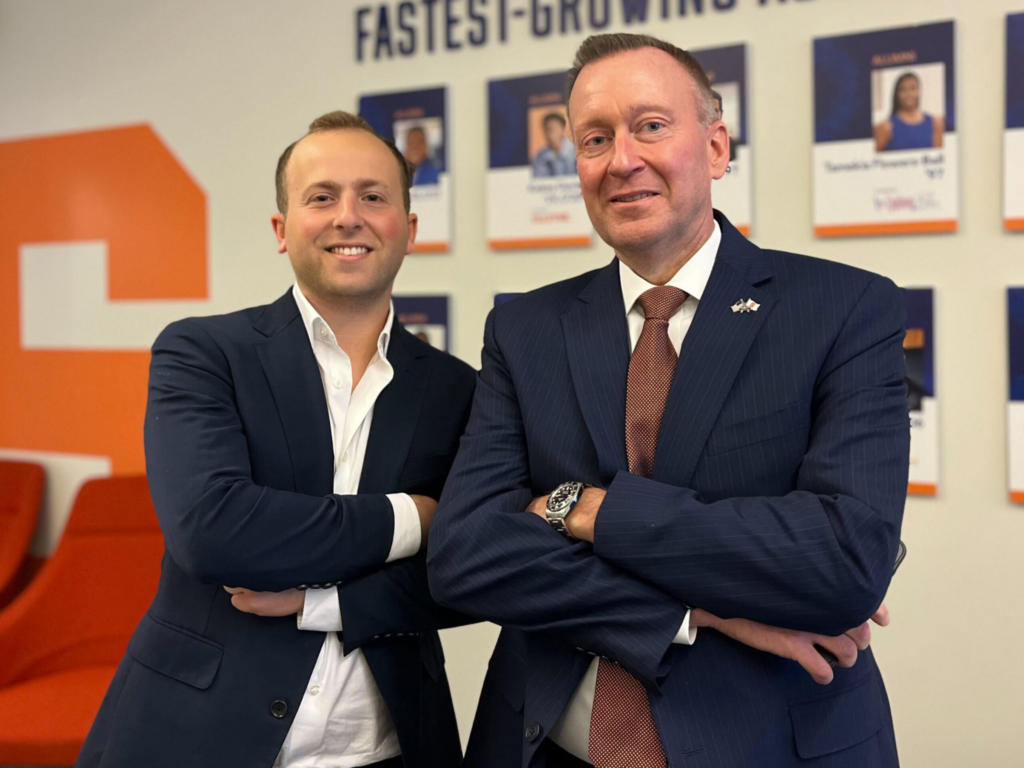
(Adler with Syracuse University Chancellor Mike Haynie)
Finding the Real Problem
The more Out2Win worked with brands, the more Adler saw a flaw in the original agency model.
Sports already had endless ways to measure athletes.
Touchdowns. Points. Goals. Awards.
But brands needed an answer to a different question:
Can THIS athlete sell MY product?
A superstar could have millions of followers and still be the wrong fit for a company. A lesser-known athlete could have a smaller audience but a stronger connection to the exact consumer that the brand wanted.
Follower count wasn’t the same thing as influence.
“We realized that there is this lack of data at the fingertips of businesses trying to make informed decisions on how an athlete could move the needle as an influencer,” Adler told Sports Business Journal.
That realization completely changed Out2Win.
The company began moving away from primarily representing athletes and toward building technology that evaluated them as marketers, using social performance, audience information and other data.
When we asked Adler to strip away the industry language and explain what problem Out2Win actually solves, his answer was simple:
“Helping brands build their cultural relevance in an age when there’s so much noise,” he said.
Noise is everywhere. Another post. Another video. Another ad. Another person fighting for attention.
“We’re helping brands align with talent that can help them break through that noise.”
That pivot became the real test.
Could a company created in college survive outside it?
Out2Win did just that.
The platform grew to include more than 400,000 athletes and influencers, and in March 2025, Out2Win raised $1.3 million to expand. The company would go on to work with brands like Amazon and Olipop, as well as athletic departments including Syracuse, San Diego State, Michigan State, South Carolina and Notre Dame.
Adler, still just a recently graduated college student, gained recognition as Syracuse’s Entrepreneur of the Year, recipient of the Hunter Watson Entrepreneurship Award, and earned a spot on Philadelphia’s 25 Under 25.
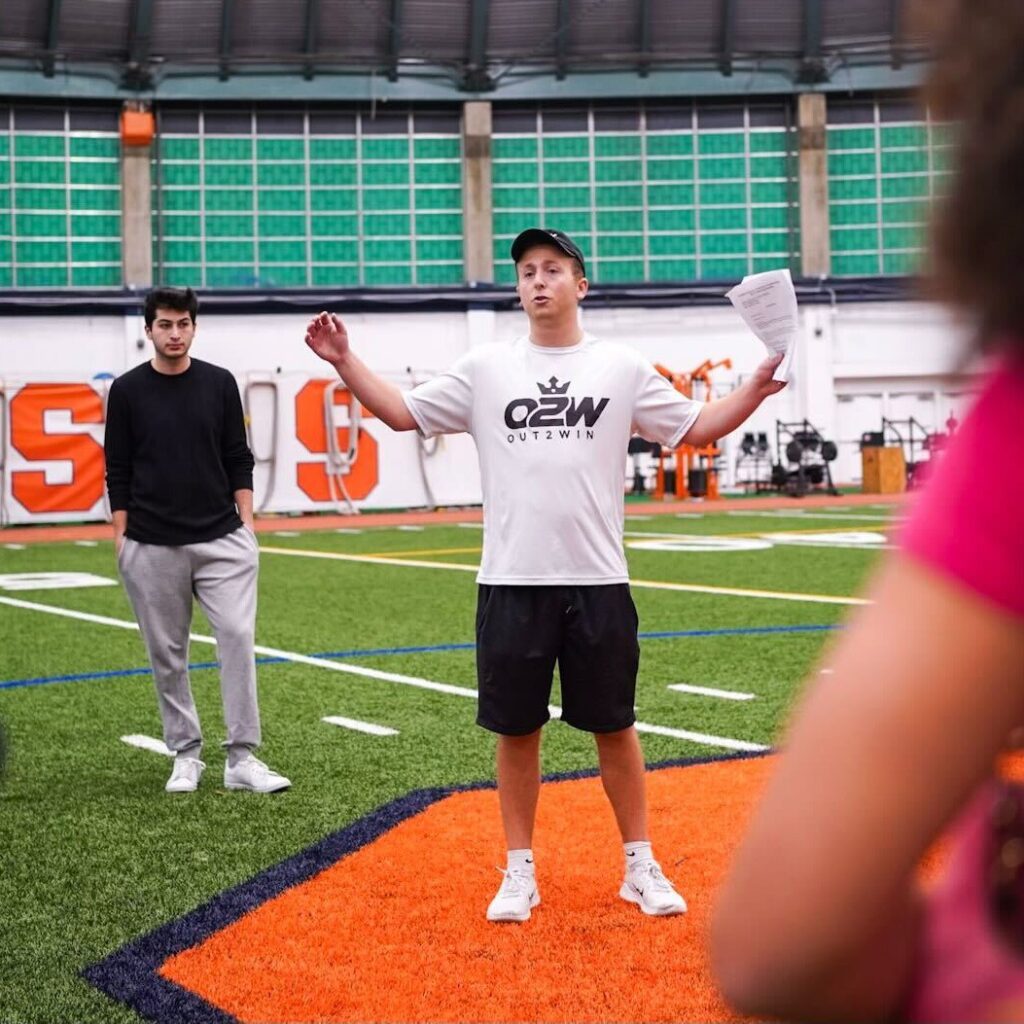
Here2Stay
Despite all the success, Out2Win didn’t stop evolving.
By 2026, Adler was hearing a new problem from brands. They didn’t only want help finding the right athletes; they wanted help executing the campaigns, too.
So once again, Out2Win expanded.
For one College Football Playoff activation with Amazon, the company worked with 54 athletes across 12 schools and generated 7.9 million impressions, according to Out2Win.
Adler was already building the next iteration.
In July, Out2Win launched Autopilot, an AI-based system designed to run athlete-influencer campaigns from start to finish.
The idea came from another problem Adler saw in the marketplace: even as athlete marketing grew, campaigns at major brands were still being managed through spreadsheets, email threads and weeks of manual coordination.
Autopilot is designed to automate much of that process — identifying and scoring talent, handling contracts, creating content briefs and amplifying campaigns through paid media. Every campaign is still overseen by Out2Win’s athlete-marketing team, whose experience running hundreds of campaigns manually helped inform the system.
“Athlete marketing never got that. It’s been held together by manual coordination, and the results have been capped by it,” Adler said.
The company says Autopilot is already being used in live campaigns. One activation for Accelerator Active Energy using five college athletes generated the brand’s best-selling week on Amazon in 2026.
Out2Win has now run campaigns for more than 140 brands, including Amazon and Nike.
Autopilot may become a defining part of Out2Win, or Out2Win may change again.
But history suggests Adler would be comfortable either way, because the most interesting question is no longer what Out2Win looks like five years from now.
It’s what Jack Adler does when the market changes again.
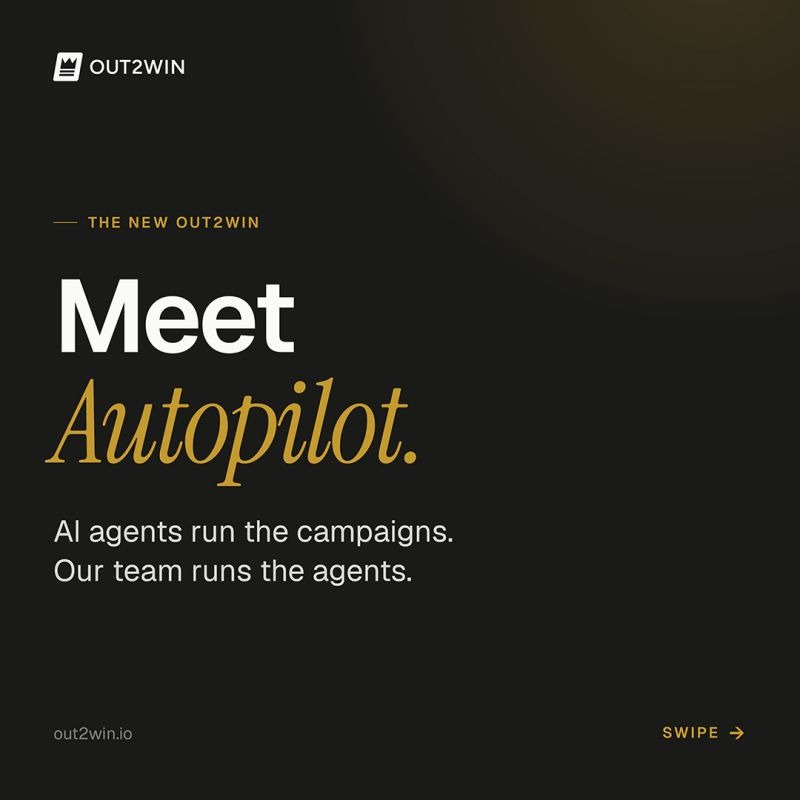
(Via Out2Win.io)
The Hustle
When we asked Jack what he wanted people to remember about him 20 years from now, his answer wasn’t Out2Win.
“I have a deep passion for entrepreneurship and innovation,” he said. “I honestly want to continue working with startups and being part of innovation for the rest of my life.”
“I hope the legacy I leave behind is being someone with a deep knack for innovation who knows how to help startups take their dreams and turn them into scalable realities.”
His story didn’t start with NIL, or AI, or $1.3 million.
It started with one small, $3 idea — a decision to try it — and then another decision to keep adapting when the next idea arrived.
Adler’s Hustle has never really been about having the perfect answer.
It’s been about starting, listening, adapting, and then building again.
THAT is the Jack Adler Hustle.
What’s YOUR Hustle?
Quick Hits
Morning person or night owl?
“I’m more of a morning person when it comes to productivity.”
Coffee drinker?
“I drink coffee, and from time to time, when I really need to be locked in, I’ll have an energy drink.”
A completely free Saturday with no work allowed?
“I’m down at my family’s beach house, and I plan to just relax, take long walks on the beach, and think about the bigger picture for the future of the business.”
The GOAT in any industry?
“As I’m trying to help recruit LeBron James to the Sixers as a Philly guy, I’m going to have to say, LeBron James.”
EDITOR’S NOTE: This interview was conducted before LeBron James made his decision to join the 76ers. So, congratulations, Jack! Doesn’t matter, though. Knicks in five.
Follow Jack Adler on Instagram!
Follow HeymanHustleTV on Instagram!
Follow Jacob Heyman on Instagram!
Follow Zach Richter on Instagram!
That’s HIS Hustle.
This is OUR Hustle.
What’s YOUR Hustle?